

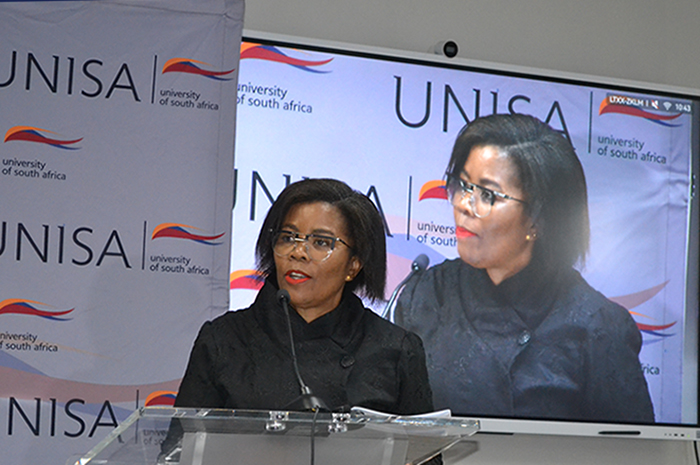
Prof Puleng LenkaBula, Unisa Principal and Vice-Chancellor, addressing media representatives
Prof Puleng LenkaBula, Unisa Principal and Vice-Chancellor (VC), and members of the executive and extended management of the university held a media briefing session on 19 March 2026 at the Muckleneuk Campus. This, the first media gathering of the year, reflected on the past five years.
The VC stated that between 2021 and 2025, a period that marked her first term as Principal and Vice-Chancellor of the institution, Unisa achieved exceptional graduation performance, graduating more than 50 000 students each year. Notably, in 2025, Unisa graduated over 60 000 students and produced more than 550 doctoral outputs.
In addition, she highlighted that over 10 800 graduates who could not graduate during the Covid-19 period were honoured at special graduation ceremonies, ensuring that their accomplishments are evident, projected and recognised.
"Unisa contributes to the National Development Plan, and we are almost 74% towards achieving the 2030 target number," she emphasised.
Continuing, the VC stated that the university has intensified its research and innovation capacity to ensure global impact, and that world rankings show sustained improvement, as reflected in, among others, the Times Higher Education Impact Rankings and the Academic Ranking of World Universities (Shanghai Rankings). Another highlight, she said, is the Stanford University/Elsevier ranking, which lists 20 Unisa academics among the top 2% academics globally. "We are recognised among the global top 800 universities," she added.
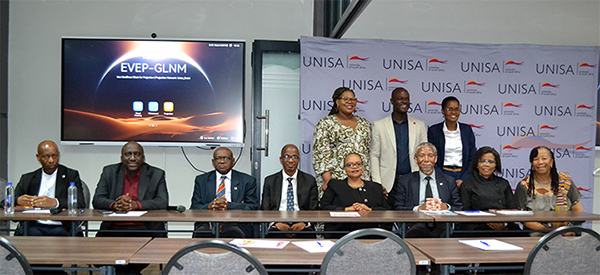
Members of Unisa's executive and extended management
The VC highlighted the university’s research output, which has improved by 42,7% according to the Department of Higher Education and Training (DHET). During the period under review, Unisa rose from eighth to sixth place in research output among South African universities.
She continued: "Unisa currently has 320 academics registered as excellent researchers by the National Research Foundation through its rating and ranking systems, compared to 199 in 2021. Looking to the future, the university recruited 863 adjunct academics to create the next generation of doctors and professors, not only for Unisa, but for the country and continent."
"The university’s catalytic niche areas are meant to propel Unisa as an important anchor for the economy, for social impact, for transformation and for highly complex research," the VC indicated.
She proceeded to address each of the catalytic niche areas in detail, maintaining a special focus on energy studies, biotechnology, nanotechnology, the fourth industrial revolution, and Feminist/Bosadi/Womanist theorisations.
The VC stated that Unisa has diverse partnerships with reputable organisations to strengthen and enhance its relations globally.
Among others, she cited the College of Law, which has partnered with the South African Police Service and the South African Air Force to ensure peace and justice. Other successes mentioned were the College of Accounting Sciences' collaboration with the Special Investigating Unit Academy to produce a specialised master's qualification in anti-fraud, and the partnership between Unisa and the University of Namibia to advance the Africa Millimetre Telescope project, the first of its kind in Southern Africa.
Turning to governance, the VC said that the DHET has approved Unisa’s revised Institutional Statute. "Institutional governance frameworks, the delegation of authority framework, supply management policy, and all other policies that strengthen the governance of the university were approved by the Unisa Senate and Council," she said.
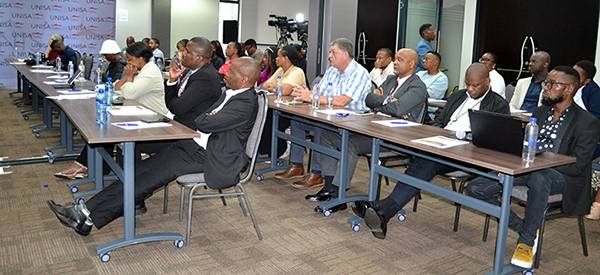
Members of the national media in attendance
The VC said that the university’s reserves grew from R9 billion to more than R24 billion over five years, and multiple consecutive unqualified audit opinions were achieved between 2021 and 2024. She added that Unisa, through its Foundation, has managed to raise over R200 million to assist financially disadvantaged students
At the end of the briefing, Unisa announced that it has acquired a 20-hectare airport to serve as a training and research facility.
"This airport will give our students a unique opportunity to apply their studies in practice and gain skills that are in high demand in the aviation and engineering industries," said Prof Boitumelo Senokoane, Executive Director of the university’s Department of Institutional Advancement. "It demonstrates our commitment to innovation and practical education alongside strong governance and institutional integrity."
* By Nontsikelelo Ndebele, Moleboheng Mpafa, and Victor Malatji, Journalist Interns, Department of Institutional Advancement
** Photography by Victor Malatji
Publish date: 2026-03-20 00:00:00.0
 Scaling success: Unisa reflects on leadership, academic excellence and growth
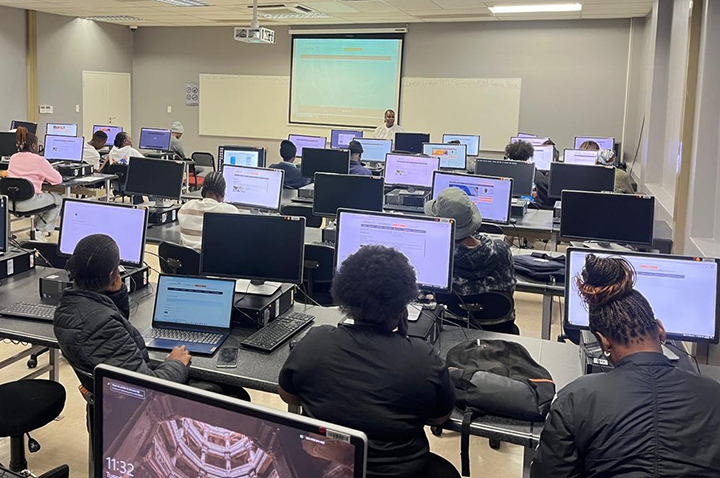 Unisa welcomes students during Orientation Week 2026
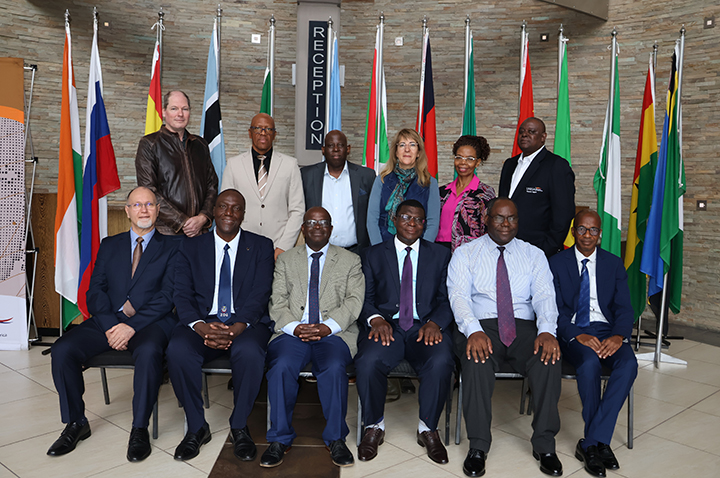 Unisa hosts the Zimbabwe Open University to exchange research know-how
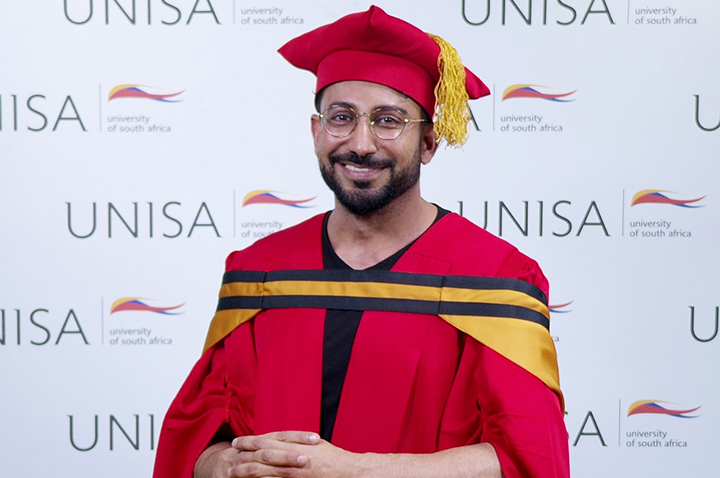 Towards a ritual-informed humanitarian psychology
 Unisan joins the Executive Committee of CSA-SA