
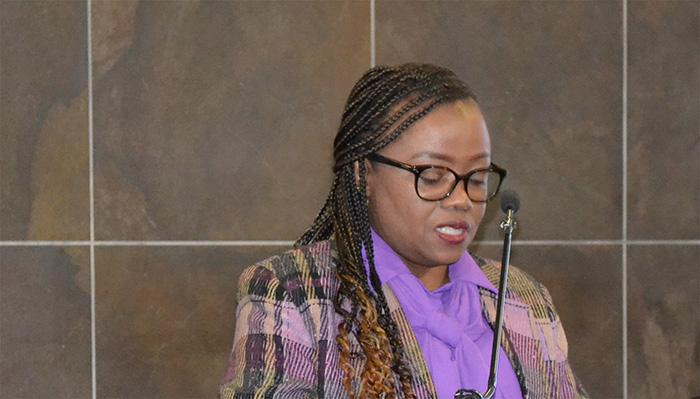
Mosidi Mokgele, Executive Member of the National Press Club
On 12 March 2026, Unisa, in collaboration with the National Press Club, hosted a roundtable discussion on radio and artificial intelligence (AI), aligned with the 2026 World Radio Day (WRD) theme. Held at Unisa’s Muckleneuk Campus, the dialogue featured a panel of experts from Unisa, the Electoral Commission of South Africa (IEC), the National Press Club, and the Council for Scientific and Industrial Research (CSIR), and it explored media, democracy and accountability in an election year.
World Radio Day was proclaimed in 2011 by the United Nations Educational, Scientific and Cultural Organization (UNESCO) and adopted by the United Nations General Assembly in 2012. It is observed globally every year on 13 February. The National Press Club celebrates Radio Day annually on 12 March, which marks the date the Founding Act of the International World Radio Day Committee was signed.
In her welcome address, Mosidi Mokgele, Executive Member of the National Press Club, expressed gratitude for the media freedom we have in South Africa, emphasising that it plays a crucial role in keeping our public discourse vibrant, our institutions accountable and citizens informed in an election year.
She further highlighted the importance of staying abreast of industry developments and pushing the boundaries of what is possible in the media space. "We have evolved from traditional print and broadcast models to a digital first-world, where AI and social media are shaping the narrative," she noted.
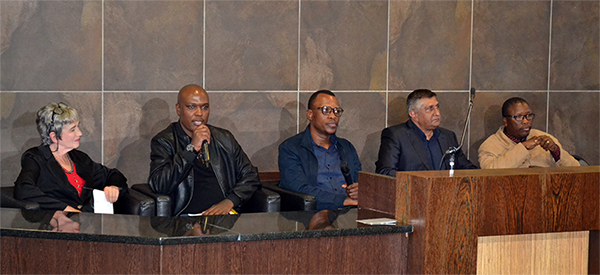
Panellists (from left): Antoinette Slabbert of the National Press Club, Tumelo Makgoara of Unisa Radio, Prof Tshepo Lephakga of Unisa's College of Human Sciences, Prof Pravesh Debba of the CSIR and Dr Victor Shale of the IEC
Discussing the impact of AI on how radio operates, Tumelo Makgoara, Unisa Radio’s Programmes Manager, stated that using AI, particularly in a year of local elections, ensures that accurate information is shared with citizens. "AI allows us to verify data in real time," he said.
In addition, Makgoara explained the role of the media in local elections, noting that institutions such as Unisa Radio have first-hand contact with the general public on the ground, which fosters growing interest in municipal governance, helping increase the number of people registering and participating in local elections.
"We are a key point into local governments and areas, since most national media platforms focus mainly on national elections," he emphasised.
Prof Tshepo Lephakga of Unisa’s College of Human Sciences argued that civil society organisations, such as local churches and youth forums, can play a significant role in fostering voter participation and holding political leaders accountable. He further called for the development of critical thinking amid the rising usage of AI.
During the question-and-answer session, audience members raised concerns about electoral integrity in the digital age, tech innovations and transparency, and media literacy.
Prof Pravesh Debba, CSIR Impact Area Manager for Inclusive Smart Settlements, Regions and Functional Building Structure, provided valuable insights into the CSIR’s election prediction model and social media trends from previous elections, highlighting its contribution to informing citizens and promoting media literacy.
* Article and photography by Victor Malatji, Journalist Intern, Department of Institutional Advancement
Publish date: 2026-03-16 00:00:00.0
 A 1970s vision for global equality remains relevant
 Unisa roundtable highlights the importance of media in an election year
 Marion Island: The Unisa connection
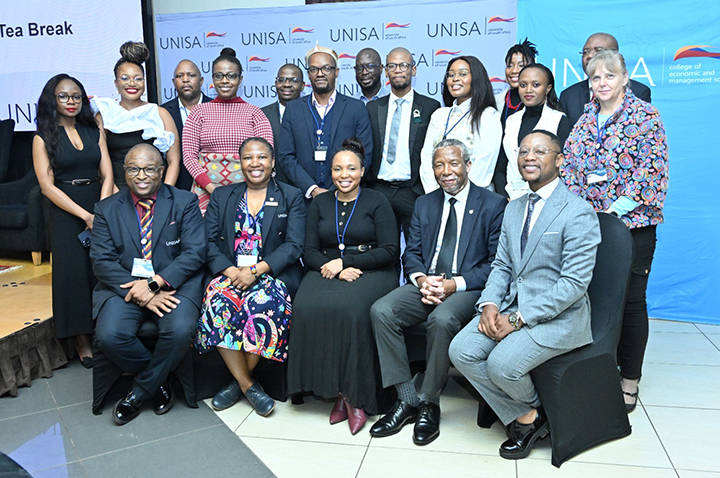 Unisa hosts Eighth Post-Budget Dialogue on fiscal policy and sustainable transformation
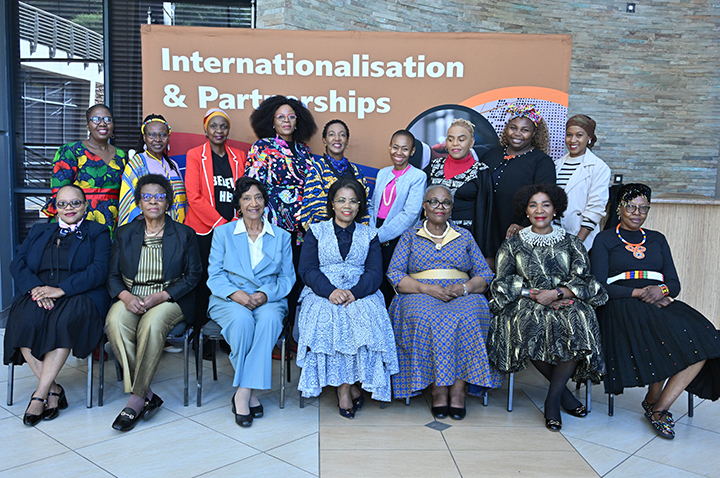 Unisa pays tribute to women and their strength