

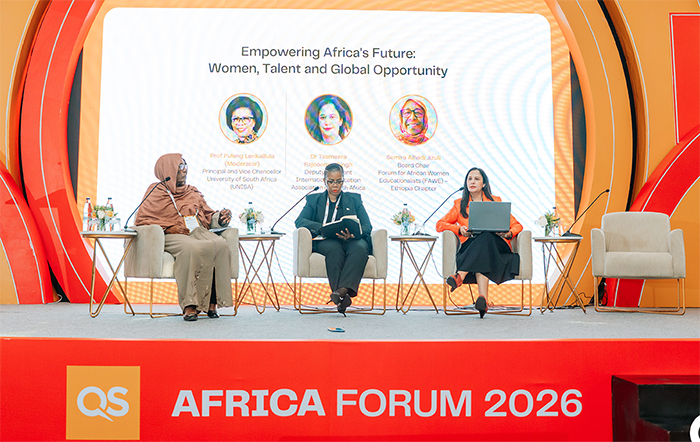
Prof Puleng LenkaBula, Principal and Vice-Chancellor of Unisa (centre), moderating a conversation with Semira Alhadi Jizuli, Board Chair, Forum for African Women Educationalists (left) and Dr Tasmeera Rajcoomar Singh, Deputy President, International Education Association of South Africa (right) Picture: Supplied
Unisa Principal and Vice-Chancellor, Prof Puleng LenkaBula, moderated a high-profile fireside chat on women's leadership at the QS Africa Forum 2026 in Addis Ababa last week, joining leading voices in higher education to examine how African universities can better support women in leadership.
Held on 9 and 10 July at the Sheraton Addis, the annual forum brought together university leaders, policymakers and higher education experts from across the continent and beyond to explore the future of African higher education through collaboration, innovation and knowledge sharing.
As part of Unisa's over-sesquicentennial celebrations, marking more than 150 years of academic excellence and service to humanity, Prof LenkaBula moderated a fireside discussion titled "Empowering Africa’s Future: Women, Talent and Global Opportunity."
The session focused on practical strategies for expanding women's leadership in higher education and examined how universities can create more inclusive institutions capable of producing the next generation of African leaders.
Joining the discussion were Dr Tasmeera Rajcoomar Singh, Deputy President of the International Education Association of South Africa, and Semira Alhadi Jizuli, Board Chair of the Forum for African Women Educationalists.
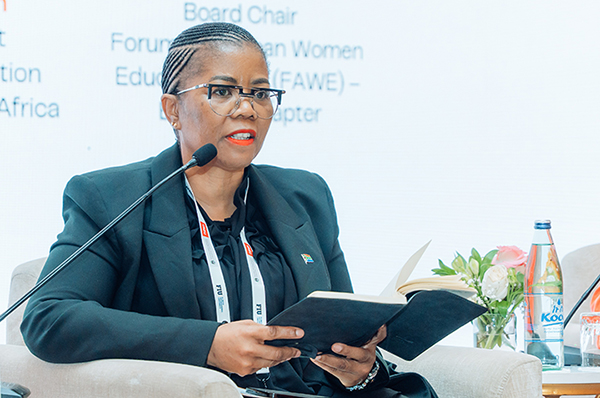
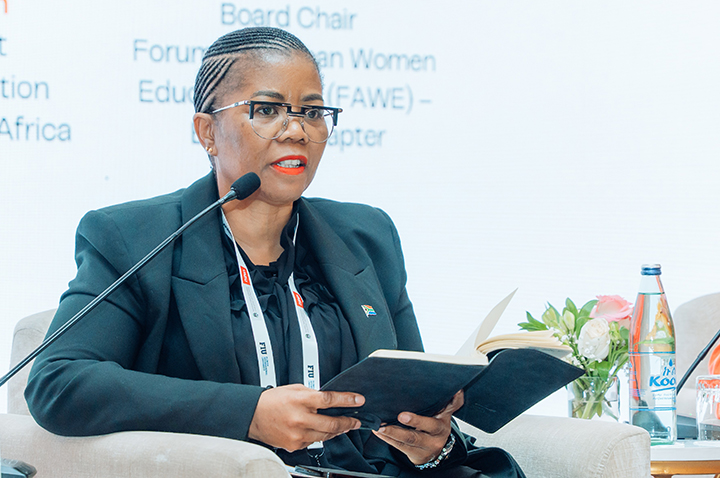
Unisa Principal and Vice-Chancellor, Prof Puleng LenkaBula, making remarks during the panel discussion. Picture: Supplied
The panel explored the structural barriers that continue to prevent many women from progressing into senior leadership positions despite increased access to higher education. Rather than focusing solely on improving representation, the discussion centred on how universities can build environments where women are empowered to influence decision-making, shape policy and lead institutions.
Participants also questioned whether Africa’s development ambitions can truly be realised without addressing persistent gender disparities in education and leadership. While acknowledging progress made through policy reforms and affirmative action, the panel agreed that these measures alone are not enough.
Instead, they argued that meaningful change will require universities to dismantle the social and economic barriers that continue to disadvantage women and to create structured pathways that support leadership development throughout academic careers.
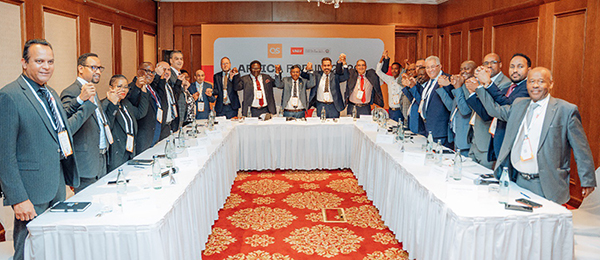
Delegates who attended the QS Africa Forum 2026. Picture: Supplied
Beyond moderating the fireside conversation, Prof LenkaBula participated in an invitation-only leadership roundtable on Africa-Arab Universities Collaboration: Advancing Impact-Driven Research Across Regions.
Co-chaired by the Association of African Universities (AAU) and the Association of Arab Universities (AArU), the closed-door session brought together senior university leaders to explore opportunities for deeper collaboration on research addressing shared continental challenges.
Discussions focused on climate resilience, public health, food and water security, renewable energy, digital transformation, entrepreneurship and future skills development.
Delegates also considered ways to expand institutional partnerships, improve researcher and student mobility, strengthen research capacity, develop sustainable funding models and accelerate the translation of research into policy and practical societal impact. The meeting further explored long-term frameworks for joint research priorities, collaborative funding opportunities and future engagement between African and Arab universities.
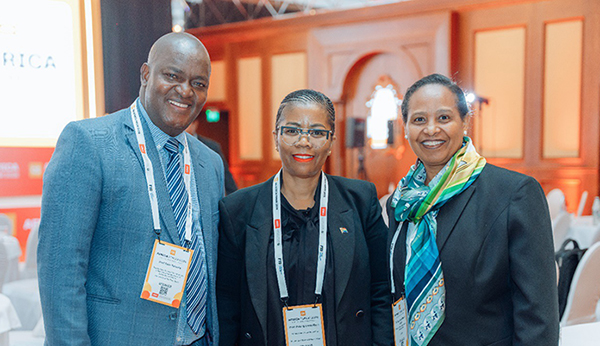
Prof Puleng LenkaBula with Prof Sam Tshehla, Deputy Vice-Chancellor: Strategic Initiatives, International and Institutional Affairs at the University of the Free State, and Dr Tsige Aberra, Regional Director of the Unisa Ethiopia Campus. Picture: Supplied
The QS Africa Forum 2026, organised in partnership with United Arab Emirates University (UAEU), continues to serve as a platform for fostering collaboration, innovation and shared solutions aimed at strengthening higher education across the continent.
Prof LenkaBula's participation reflected her continued commitment to advancing gender transformation, inclusive leadership and international collaboration, priorities she has championed since becoming Unisa's first female Principal and Vice-Chancellor in 2021.
The forum also provided an opportunity to celebrate Unisa's growing international standing. On behalf of the university, Prof LenkaBula received a QS certificate recognising Unisa's strong performance in the 2027 QS World University Rankings, where it retained its place among Africa's top 10 universities.
As Africa's largest open distance and e-learning institution, Unisa continues to strengthen its global reputation while reaffirming its commitment to delivering accessible, high-quality higher education with international impact where it retained its place among Africa's top 10 universities.
* By Karabo Ngoepe, Editor, Department of Institutional Advancement
Publish date: 2026/07/14
 Tectonic shifts in geopolitics examined at Unisa seminar
 Leading laparoscopic and robotic surgeon to speak at Unisa's CNA Research Symposium
 Prof Puleng LenkaBula champions women's leadership at QS Africa Forum 2026
 From shy youngster to student leader
 Unisa alumnus recounts his journey of purpose and perseverance